

Lot n° 126
Estimation :
300 - 500
EUR
Register for the sale on drouot.com
Leave absentee bid
Your amount
EUR
Bid by phone
Bid by phone
Your amount
EUR
Matthieu RICARD (Born in 1946) - Lot 126
Matthieu RICARD (Born in 1946)
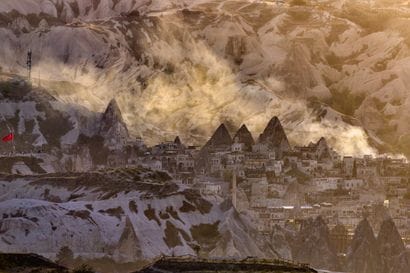
The “Red Valley,” Cappadocia, Turkey, October 2024
Art print, UltraChrome HDX pigment inks, Epson Premium Glossy paper, mounted on 2mm Dibond
60 x 90 cm
Label on the back of the mount.
This exhibition print may show slight marks or imperfections.
Proceeds from the sale of this print will benefit the Karuna Shechen Association and its relief programs for victims of the August 26, 2026, floods in Nepal.
The “Red Valley,” Cappadocia. The rock formations of Cappadocia, Turkey, are the result of a long geological history and natural erosion. They are also known as “fairy chimneys” (peribacası in Turkish) because of their distinctive shape, which resembles chimneys or towers. These rock formations were created several million years ago as a result of volcanic eruptions. Nearby volcanoes, notably Mount Erciyes and Mount Hasan, spewed immense quantities of volcanic ash and lava, which settled in successive layers. Over time, these layers turned into a soft rock called tuff. Later, denser and harder lava flows covered the tuff, creating a protective layer. Erosion by water, wind, climatic variations, and morning dew then shaped these rocks over the course of millennia. Since tuff is relatively soft, it eroded more quickly than the more resistant layers of lava, thus forming these spectacular columns. The upper parts of the columns, often capped with harder rock, have resisted erosion, giving them the appearance of mushrooms or topped towers. These natural towers can reach heights of tens of meters. Erosion has also carved out deep valleys, such as the Göreme Valley, where numerous rock-cut churches and cave dwellings can be found, hewn directly into the soft rock. The soft nature of the tuff has also allowed the region’s inhabitants to carve out underground dwellings, some of which are quite complex. These unique rock formations and landscapes make Cappadocia a place of great natural beauty, blending geology and human history.
The Red Valley, Cappadocia. The rock formations of Turkey’s Cappadocia region are the result of a long geological history and natural erosion. They are also known as “fairy chimneys” (peribacası in Turkish) because of their distinctive shape, reminiscent of chimneys or towers. These rock formations were formed millions of years ago by volcanic eruptions. Nearby volcanoes, notably Mount Erciyes and Mount Hasan, spewed immense quantities of volcanic ash and lava, which were deposited in successive layers. Over time, these layers turned into a soft rock called tuff. Denser, harder lava flows then covered the tuff, creating a protective layer. Erosion caused by water, wind, climatic variations, and morning dew then shaped these rocks over the millennia. Since tuff is relatively soft, it eroded faster than the more resistant lava layers, forming these spectacular columns. The upper parts of the chimneys, often capped with harder rock, have resisted erosion, giving them the appearance of mushrooms or capped towers. These natural towers can reach dozens of meters in height. Erosion has also carved out deep valleys, such as the Göreme Valley, where numerous rock-cut churches and cave dwellings can be found, carved directly into the soft rock. The soft nature of the tuff has also allowed the region’s inhabitants to excavate underground dwellings, some of which are quite complex.
My orders
Sale information
Sales conditions
Return to catalogue